
Talinum fruticosum (L.) Juss.
|
It is commonly known as Sambar keerai and belongs to the Talinaceae family. It is a leafy vegetable. Treating human mononuclear cells with aqueous extract of stem (500 mg/mL WTS for 72 hours) significantly upregulated the levels of immunomodulators like- IL-1β , IFN-γ, and TNF-α. Mode of Consumption : Sauteed and fried |
| Plant Details | Agro-climatic Zone | Vernacular Names | Pictures |
| Scientific Name: Talinum fruticosum (L.) Juss. Family: Talinaceae (Fenzl) Doweld Class: Magnoliopsida Order: Caryophyllales Genus: Talinum Adans Fruiting Season: January to April Parts: Leaves & Tender shoot |
|
Assam : Bilati-paleng Tamil Nadu : Sambar keerai, Pasali |
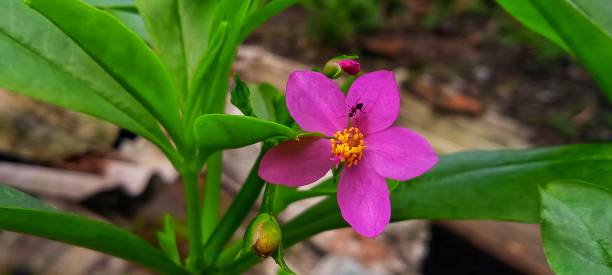 Plant |
| Compound/Extract | Activity | Mode of Action | Marker/References |
| Aqueous stem extract | Immunomodulatory | Treatment with aqueous extract of stem (500 mg/mL WTS for 72 hours) significantly increased the levels of IL-1β , IFN-γ, and TNF-α in human mononuclear cells. | IL-1β , IFN-γ, and TNF-α [1] |
| Polysaccharide | Anti-tumor | In vivo study showed that polysaccharide (TPP) (200 mg per kg bw) significantly inhibited the growth of tumor by 49.07% in H22-bearing Kunming mice. The levels of iNOS, TLR2, TLR4 and IL-1β were also increased by TTP. | iNOS, TLR2, TLR4, and IL-1β[2] |
| Polysaccharide | Immunomodulatory | Polysaccharide stimulated NO and TNF-α secretions of RAW264.7 macrophages but also inhibited growths of human colon cancer SW620 cells. | NO and TNF-α [3] |
| Ethanolic leaf extract | Haematopoietic, Immunoboosting | Oral administration of ethanolic leaf extract (100 mg/kg bw) increased the packed cell volume (PCV), haemoglobin (Hb), red blood cell (RBC), Mean Corpuscular Volume (MCV), white blood cells (WBC), lymphocyte and platelet counts in Wistar rats. | [4] |
| Major Class | Metabolites (Content of bioactives: mg/100g Fresh Weight) |
| Carotenoid | β- Carotene: [5] |
| Vitamin | Niacin: 0.37±0.01 mg/100g, Riboflavin: 0.14±0.01 mg/100g, Thiamin: 0.02±0.00 mg/100g, Tocopherol: 21.62±0.03 mg/100g, Vitamin C: 41.27±0.04 mg/100g[5] |
| Effect | Observation | DOI |
| Disease | Formulation | Reference | Author | TKDL |
| Information from Wealth of India | Reference |
|
CSIR(1976).The Wealth of India, Raw materials,Vol.-X ,P.113-114, New Delhi, India |
| 4.2, 04.2.1, 04.2.1.1, 04.2.1.3, 04.2.2.5, 04.2.2.6, 04.2.2.8 |
| CSIR-North East Institute of Science and Technology, Jorhat-6, Assam, India
CSIR-Institute of Himalayan Bioresource Technology, Palampur-61,Himachal Pradesh, India |