
Spinacia oleracea L.
|
Spinach is a green leafy vegetable belonging to the family Amaranthaceae. It is a fleshly leaved annual herb whose leaves are green and arranged in heavy rosette. Leaves are eaten raw or cooked. Its leaves are rich source of carotenoids (β-carotene, lutein), flavonoids (Quercetin) and phenolics (apigenin and ortho-coumaric acid). These phytochemicalsreduce the cellular oxidative stress in lymphocytes by increasing the activity of antioxidant enzymes and inhibition of lipid peroxidation, and further enhances the proliferation of T-Lymphocytes in the body. Mode of Consumption : Fresh, sauteed, fried and boiled |
| Plant Details | Agro-climatic Zone | Vernacular Names | Pictures |
| Scientific Name: Spinacia oleracea L. Family: Amaranthaceae Juss. Class: Magnoliopsida Order: Caryophyllales Genus: Spinacia L. Fruiting Season: All round the year Parts: Leaves |
|
Andhra Pradesh : Palakura Assam : Paleng Bihar : Palak Himachal Pradesh : Palak Karnataka : Soppu Kerala : Chira Punjab : Palak Tamil Nadu : Palakura Uttar Pradesh : Palak Uttarakhand : Palak |
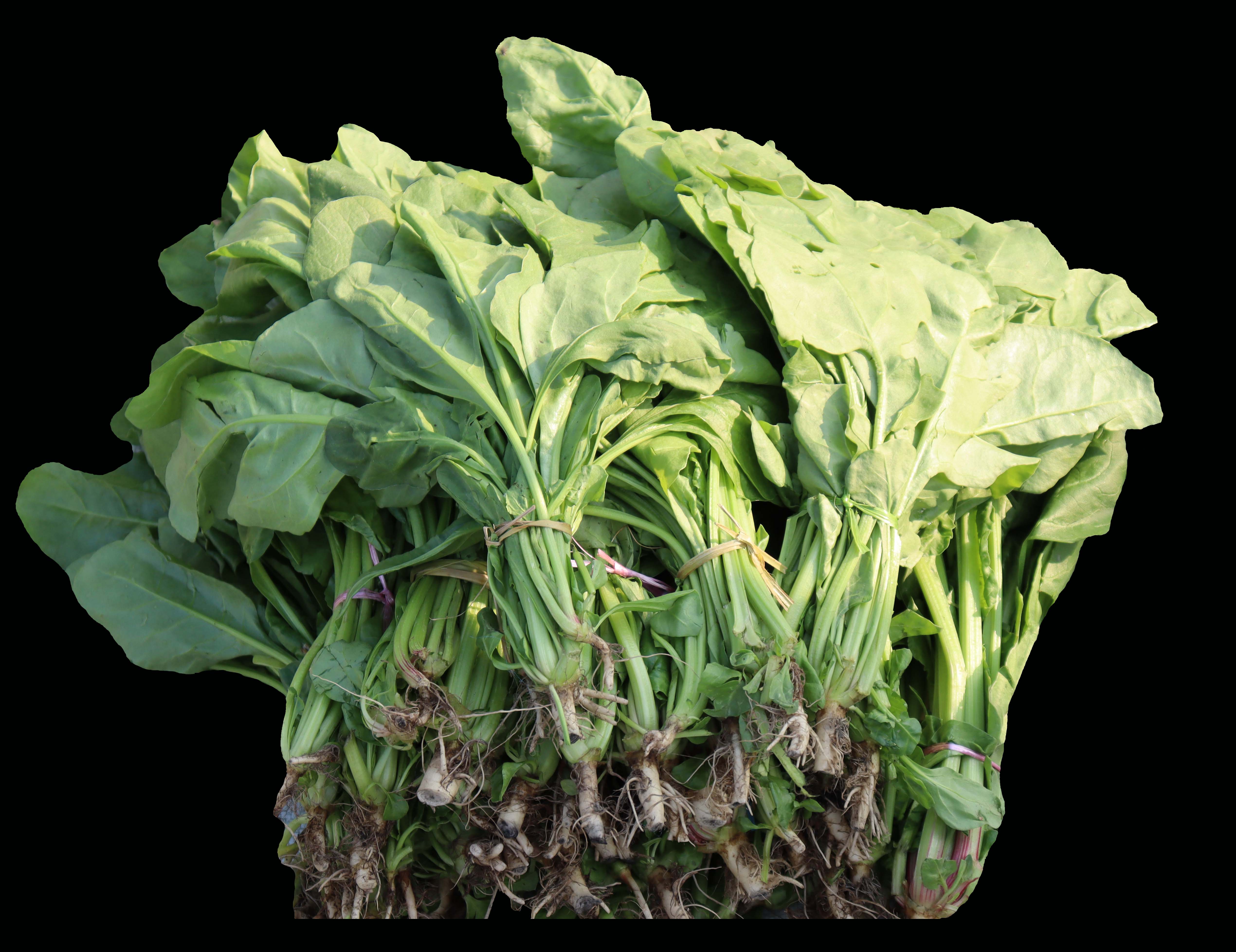 Fresh leaves |
| Compound/Extract | Activity | Mode of Action | Marker/References |
| Fresh leaves | Antioxidant | Fresh leaves significantly decreases damage in lymphocyte DNA. | Lymphocyte DNA[1] |
| Fresh leaves | Immunomodulatory | Fresh leaves helps in delayed type hypersensitivity due to the activation and prolifertaion of T lymphocytes which releases cytokines. | T lymphocytes[4] |
| Major Class | Metabolites (Content of bioactives: mg/100g Fresh Weight) |
| Carotenoid | Lutein: 3.35 - 5.3 mg/100g, β- Carotene: 1.89-3.15 mg/100g[2] |
| Flavonoid | Apigenin: 17 mg/100g, Quercetin: 5 mg/100g[3] |
| Phenolic acid | Ortho-coumaric acid: 5.58 mg/100g[2] |
| Effect | Observation | DOI |
| Animal model studies | Increase in Lactobacillus reuteri and decrease in Staphylococcus spp., Kocuria and Bacillus simplex. | DOI: 10.1017/jns.2012.29 |
| Animal model studies | Increase abundance of Bacteroides and Akkermansia and decrease in Lactobacillus and Lactococcus | DOI: 10.1016/j.jff.2019.103436 |
| Disease | Formulation | Reference | Author | TKDL |
| Acute diarrhoea | Atisreapathyam | Bhaishajya Ratnavali | Govinda Dasa, Edited by Rajeshvaradutta Shastri, Translated by Ambikaduttashastri, Published by Chaukhamba Sanskrit Sansthan, Varanasi, Edn. 14th, 2001 | Ayurveda |
| Ascites(Istisqaa -e- Ziqqi), Biliary Colic(Qoolanj-e-safrawi), Spleenalgia(Waja'-ul-Tehaal), Jaundice(Yaraqaan-e-Asfar), Chronic Abscess(Dubaila), Hepatalgia(Waja-ul-Kabid) | Kalkalaanaj Sagheer | Al-Qaanoon-fil Tibb, Vol. V | Abu Ali Ibn-e-Sina, Publication Department, Jamia Hamdard, New Delhi-62, 1996 | Unani |
| Insomnia(Sahar), Meningitis(Faraaneetas), Headache (Suda') | Paashoyah Bara-e- Suda Wa Sahar | I'laaj al Amraaz | Mohammad Shareef Khan, Afzal-al- Matabe, Barqi Press, Delhi, 1921 | Unani |
| Information from Wealth of India | Reference |
|
CSIR(1976).The Wealth of India, Raw materials,Vol.-X ,P.12-15, New Delhi, India |
| 4.2, 04.2.1, 04.2.1.1, 04.2.1.3, 04.2.2.3, 04.2.2.5, 04.2.2.6, 04.2.2.8 |
| CSIR-North East Institute of Science and Technology, Jorhat-6, Assam, India
CSIR-Institute of Himalayan Bioresource Technology, Palampur-61,Himachal Pradesh, India |