
Solanum lycopersicum L.
|
Tamatar is a commonly available vegetable(fruit) which belongs to the family Solanaceae. Its fruits are a rich source of carotenoids (Lycopene), flavonoids (Kaempferol, Quercetin) and phenolics (Chlorogenic acid). The consumption of tomatoes enhances innate immunity by promoting the activity of natural killer cells and lymphocytes,which releases anti-proliferative cytokines like TNF-α, IL-8, IL-2. Mode of Consumption : Fried, cooked, and roasted (bharta), raw as salad |
| Plant Details | Agro-climatic Zone | Vernacular Names | Pictures |
| Scientific Name: Solanum lycopersicum L. Family: Solanaceae Juss. Class: Magnoliopsida Order: Solanales Genus: Solanum L. Fruiting Season: All round the year Parts: Fruit |
|
Andhra Pradesh : Tamota Arunachal Pradesh : Bor bilahi, Bilahi Assam : Bilahi Bihar : Tamatar Himachal Pradesh : Tamatar Karnataka : Takkaali, Tometo Kerala : Takkali Manipur : Khamen asinba Mizoram : Sapbawkbawn Nagaland : Bengeno, Bengenuo, Bienyieno Punjab : Tamatar Tamil Nadu : Thakkali Uttar Pradesh : Tamatar Uttarakhand : Tamatar |
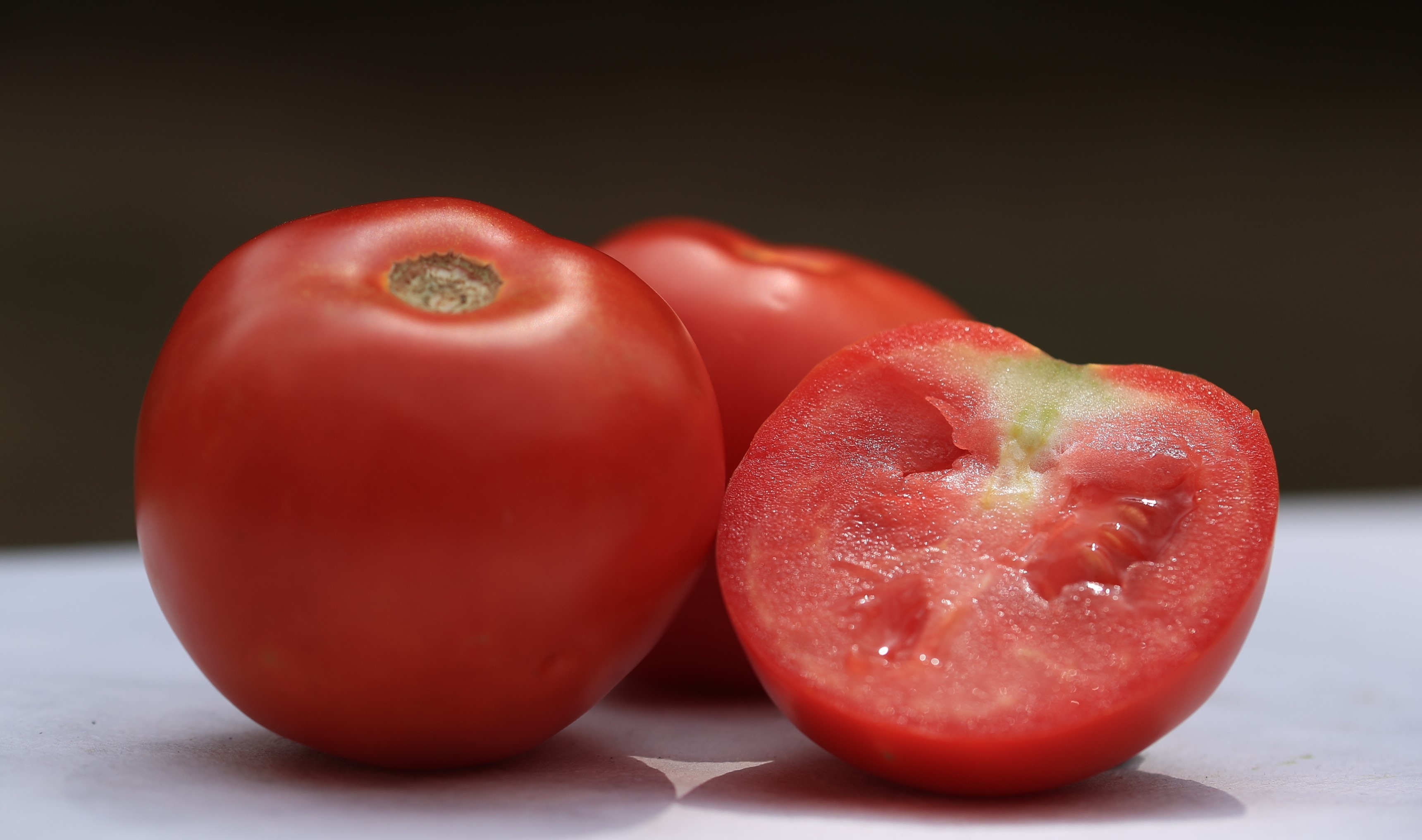 Fruit 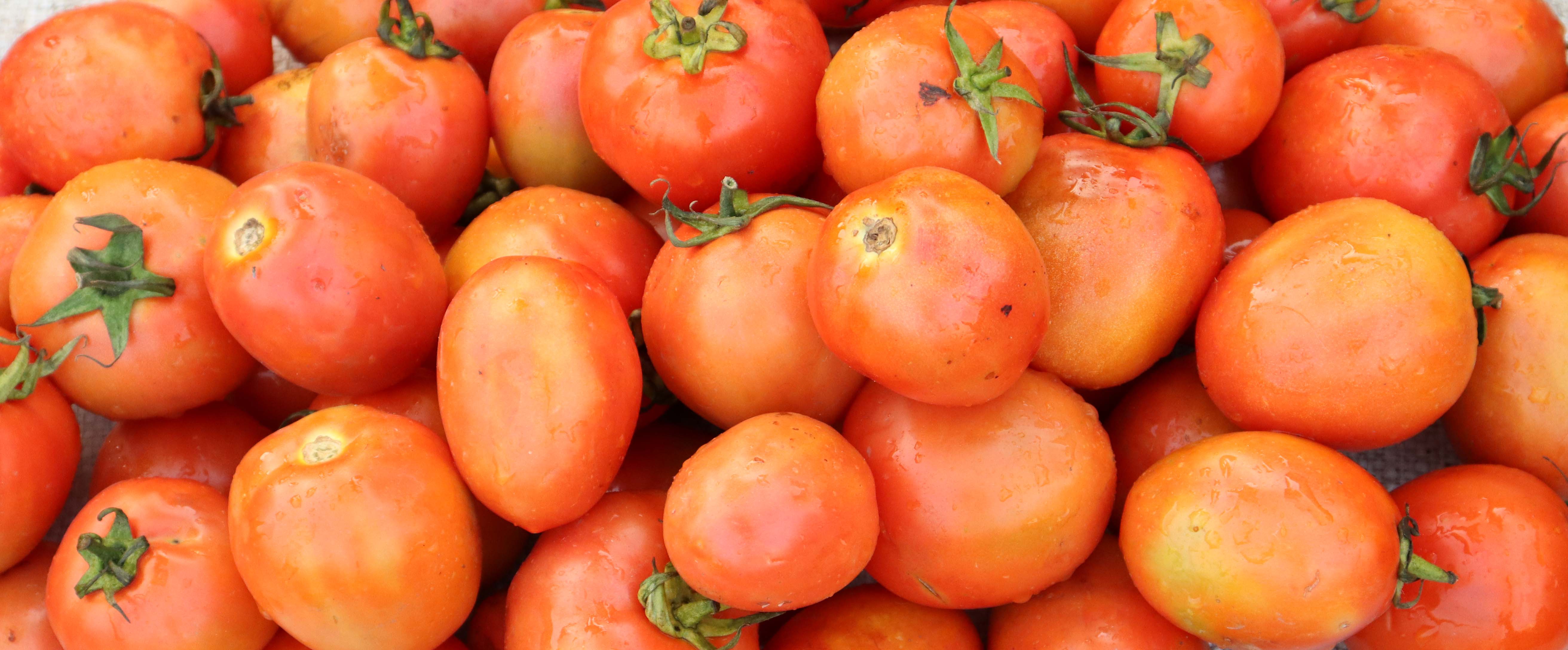 Fruit |
| Compound/Extract | Activity | Mode of Action | Marker/References |
| Lycopene | Immunomodulatory | Lycopene significantly inhibited CD69 expression (by up to 12%) as well as IL-2 secretion (by up to 29%) in peripheral blood mononuclear cells. | CD69 and IL-2[1] |
| Lycopene | Anti-inflammatory | Lycopene inhibited LPS-induced production of NO and IL-6 with decreased mRNAs of iNOS and IL-6 in macrophages. | NO, IL-6, iNOS, and IL-6[2] |
| Lycopene | Anti-inflammatory | Lycopene inhibited the inflammatory response of RAW 264.7 cells to LPS through inhibiting ERK/p38 MAP kinase and NF-κB pathway. | ERK/p38 MAPK, and NF-κB [2] |
| Seed oil | Anti-inflammatory | Tomato seed oil enhanced β-oxidation by increasing the expression of CPT1A, ACADL and PPAR-α, subsequently reducing plasma lipid levels. | CPT1A, ACADL and PPAR-α[5] |
| Antioxidant | Reduced spontaneous and H2O2- induced oxidative stress in THP-1 human macrophages by downregulating phosphorylation of the MAPK ERK1/2, JNK, and p-38, activation of the redox-sensitive NF-κB, and expression of the heat shock proteins 70 and 90 and downregulated ROS production. | H2O2-, MAPK ERK1/2, JNK,, p-38, NF-κB, and ROS[5] | |
| Fruit | Anti-inflammatory | Tomato consumption showed reduction in IL-6. | IL-6[6] |
| Juice | Anti-inflammatory | Tomato juice significantly decreased serum concentrations of IL-8 and TNF-α compared with baseline and with control group (humans age between 20 and 40 years). | IL-8 and TNF-α[7] |
| Juice | Immunomodulatory | Tomato juice consumption for 2 weeks increased IL-4 secretion capacity of PBMC. | IL-4[8] |
| Lycopene | Immunomodulatory | Lycopene significantly inhibited the expression of an early marker of activation, CD69, as well as IL-2 secretion. | CD69 and IL-2[9] |
| Drink | Anti-inflammatory | Tomato Juice helps enhancing lytic activity in NK cells, proliferation of lymphocytes which later releases TNF-α, IL-8, IL-2 and β-Carotene which gets converted to Retinol(Vit-A) which further helps to scavenge free radicals. | NK cells, TNF-α, IL-8, and IL-2[10] |
| Lycopene | Anticancer | Lycopene selectively inhibited MCF-7 breast cancer cells but not MCF-10 normal mammary epithelial cells. | [11] |
| Lycopene | Immunomodulatory | The cardioprotective effect of lycopene on induced oxidative stress and heart lysosomal damage in rats was accompanied by up-regulation of IL-12 and IFN-γ. | IL-12 and IFN-γ[11] |
| Tomatidine | Anti-inflammatory | Tomatidine decreased iNOS and COX-2 expression through suppression of I-kBα phosphorylation, NF-κB nuclear translocation, and JNK activation in LPS-stimulated macrophages. | iNOS, COX-2, I-kBα, NF-κB, and JNK[11] |
| Carotenoid | Anticancer | An analysis of prospective cohort studies on the relationship between carotenoids and breast cancer (3055 case subjects and 3956 matched controls) suggested that women with higher circulating levels of carotenoids (α-carotene, β-carotene, lutein + zeaxanthin, lycopene, and total carotenoids) possibly experience reduced risk of breast cancer. | [11] |
| Polysaccharide | Anti-inflammatory | Polysaccharide inhibited NF-κB activation and iNOS gene expression by preventing the reactive species production in LPS-Stimulated J774 Macrophages. | NF-κB and iNOS[12] |
| Oleoresin | Anti-inflammatory | Oleoresin inhibited NF-κB in transfected EA.hy926 cells. | NF-κB[14] |
| Fruit powder | Immunoboosting | Tomato powder enhanced cell‐mediated and humoral immune responses through a significant increase in phagocytosis, chemotaxis, and levels of immunoglobulins (TIg, IgG, IgM and IgA) in rabbits. | TIg, IgG, IgM and IgA[15] |
| Tomato juice | Immunomodulatory | Tomato Juice increases secretion of IL-2 in PBMC and also increases proliferation of Lymphocytes. | IL-2 and Lymphocytes[16] |
| Lycopene, a-tocopherol, ascorbic acid | Anti-inflammatory | Lycopene, a-tocopherol, ascorbic acid and the mixture of these three bioactives reduced the release of TNF-α and IL-8, and stimulated the release of IL-10. | TNF-α, IL-8, and IL-10[17] |
| Aqueous extract | Anti-inflammatory | Aqueous extract and ferulic acid presented inhibitory activity on the expression of TNF-α and IL-1β cytokine by inhibiting the NF-κB activation. | TNF-α, IL-1β, and NF-κB[18] |
| Antioxidant | Antioxidant activity (AA) in fresh tomatoes was decreased by boiling. A number of studies indicate that the content of carotenoids and vitamin C may be negatively affected by various cooking methods such as boiling, frying, drying, and microwaving. | [20] |
| Major Class | Metabolites (Content of bioactives: mg/100g Fresh Weight) |
| Carboxylic Acid | Chlorogenic acid: 17.9 mg/100g[4] |
| Carotenoid | Lycopene: 9.25 mg/100g[4] |
| Flavonoid | Kaempferol: 6.67 mg/100g, Naringenin: 0.7, Quercetin: 4.76 mg/100g[4] |
| Glycosides | Tomatidine: [11] |
| Effect | Observation | DOI |
| Human clinical studies | Significant modification in quality and quantity of gut microbiota (Decreased count in Bacteroides, Ruminococccus, and Hungatella related OTUs, as well as increased count of Alistipes) | DOI: 10.1039/C7FO00393E |
| Human clinical studies | Decreased counts of Bacteroides, Ruminococccus, and Hungatella and increased Alistipes counts | DOI: 10.1016/j.tjnut.2022.11.009 |
| Disease | Formulation | Reference | Author | TKDL |
| Gonorrhoea, Urethral Ulcer, Vesical Irritability, Anuria / Suppression of urine, Renal ulcers, and Ulcer/Ulcers, of Urinary bladder | Banadiq -ul-buzoor | Quaraabaadeen Najm-al-Ghani | Mohammad Najmul Ghani Khan | Unani |
| Burning micturition(Hurqat-al-Baul), Gonorrhoea (Suzaak), Urethral Ulcer(Qurooh-e- Majraa-e- Qazeeb), Vesical Irritability(Jarab-e-Masaanah), Anuria / Suppression of urine(Ihtibaas-e-Baul), Renal ulcers(Qurooh-e-Kulyah) | Banadiq-ul-buzoor | Quaraabaadeen Najm-al-Ghani | Mohammad Najmul Ghani Khan, Munshi Nawal Kishore, Lucknow, (Second Edition) 1929 | Unani |
| Treatment of Headache, due to Coryza and catarrh, and Headache, with Vertigo | Qurs-e-musallas | Quaraabaadeen Najm-al-Ghani | Mohammad Najmul Ghani Khan | Unani |
| Headache (Suda'), Coryza and catarrh(Nazla Zukaam), Headache (Suda'), Vertigo(Sadar) | Qurs-e-musallas | Quaraabaadeen Najm-al-Ghani | Mohammad Najmul Ghani Khan, Munshi Nawal Kishore, Lucknow, (Second Edition) 1928 | Unani |
| Information from Wealth of India | Reference |
|
CSIR(1962).The Wealth of India, Raw materials,Vol.-VI ,P.187-196, New Delhi, India |
| 4.2, 04.2.1, 04.2.1.1, 04.2.1.3, 04.2.2, 04.2.2.3, 04.2.2.5, 04.2.2.6, 04.2.2.8, 12, 14.1.2, 14.1.2.2 |
|
| CSIR-North East Institute of Science and Technology, Jorhat-6, Assam, India
CSIR-Institute of Himalayan Bioresource Technology, Palampur-61,Himachal Pradesh, India |