
Sicyos edulis Jacq.
|
It is commonly known as Squash and belongs to the family Cucurbitaceae. The mature fruit is consumed as vegetable. It contains a wide array of bioactive compounds such as peroxidases, alkaloids, saponins, phenolic acids, flavonoids, carotenoids, cucurbitane, triterpenoids and phytosterols. The presence of polyphenols like phenolic acids, tannins and stilbenes implicates protection against fungal diseases and insect attack. The bioactive polysaccharides of squash is mostly Arabinans and Homogalacturonans that regulate macrophage functions. The biological effects like induction of TNFα and Nitric oxide secretion in macrophages are not affected during cooking process. Mode of Consumption : Boiled and fried |
| Plant Details | Agro-climatic Zone | Vernacular Names | Pictures |
| Scientific Name: Sicyos edulis Jacq. Family: Cucurbitaceae Juss. Class: Magnoliopsida Order: Cucurbitales Genus: Sicyos L. Fruiting Season: September to January Parts: Fruit |
|
Assam : Squash Karnataka : Seemebadane Manipur : Dashkush Mizoram : Iskut Nagaland : Kusü, Kskusmri, Kushü Odisha : Phuti kakudi Tamil Nadu : Seemakattirikkai, Chow-chow West Bengal : Quash |
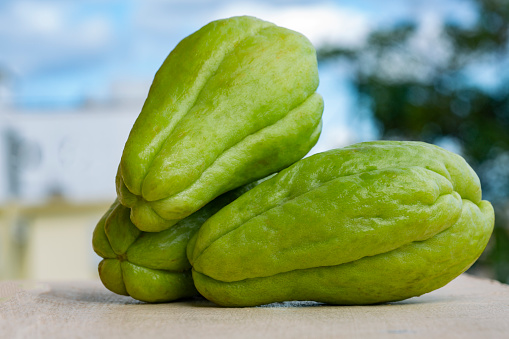 Fruit 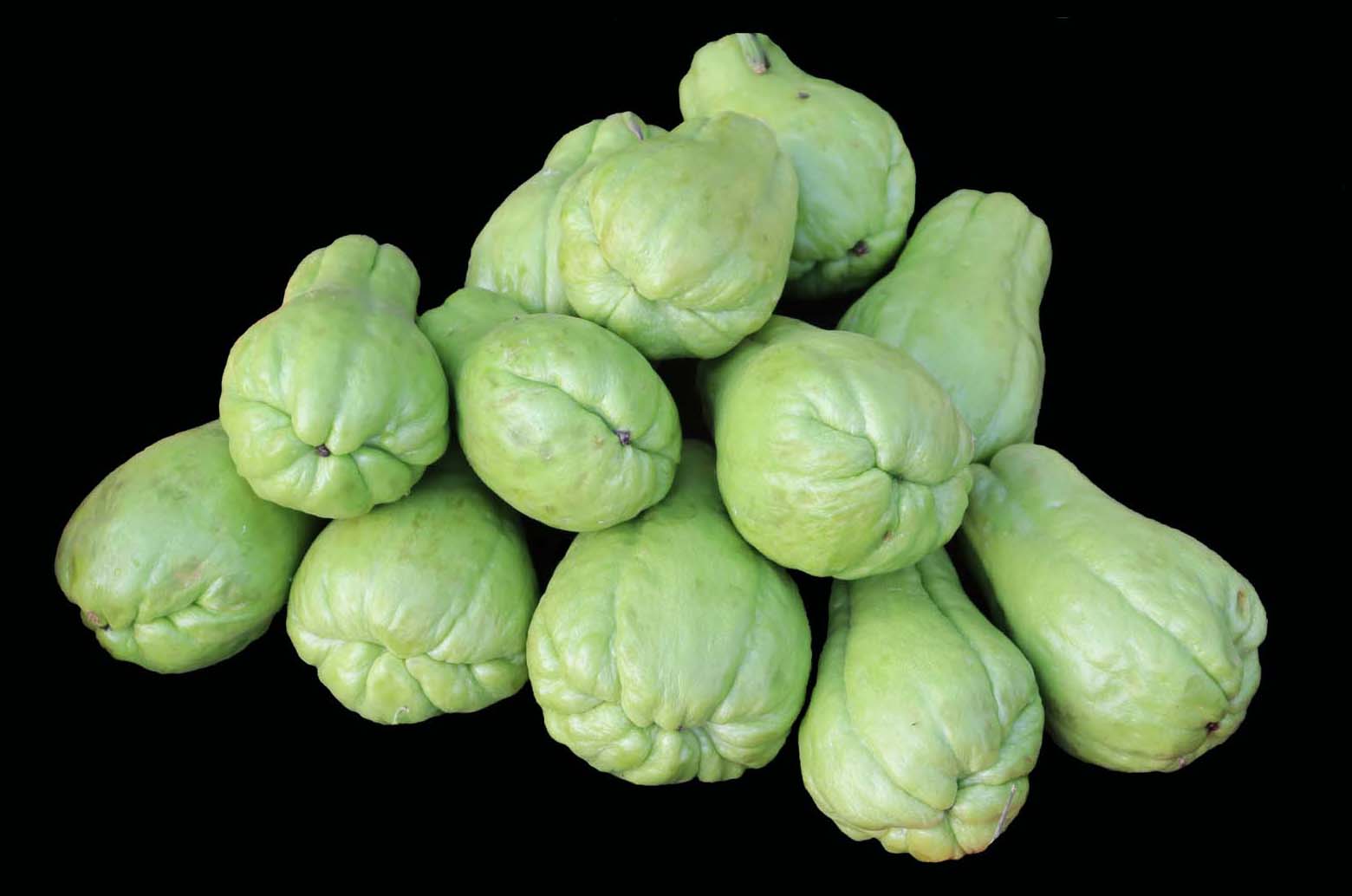 Fruit |
| Compound/Extract | Activity | Mode of Action | Marker/References |
| Polysaccharide | Immunomodulatory | Polysaccharides from raw Sicyos edulis (Sechium edule) and hot water extract (from cooked material) reduced TNF-α, NO and IL-6 secretion in activated macrophages. | TNF-α, NO, and IL-6[1] |
| Polyphenols | Antioxidant, Anti-inflammatory | The PPARα factor, which is stimulated by the polyphenols present in Sicyos edulis (Sechium edule), interfered with the signaling of pro-inflammatory transcription factors, including STAT, AP-1 and NF-κB. | PPARα, STAT, AP-1, and NF-κB[2] |
| Polyphenols | Antioxidant, Anti-inflammatory | Statistically significant decrease in the concentration of TNF-α was found (baseline, 5.3 ± 1.4 vs. post-treatment, 3.5 ± 1.3, p < 0.05) in older adults with metabolic syndrome. | TNF-α[2] |
| Fruit extract | Antioxidant, Anti-inflammatory | The extract of fruits of the Sicyos (Sechium) hybrid reduced the levels of TNF-α, IFNγ, and IL-6 but increased IL-10 and glutathione peroxidase levels. | TNF-α, IFNγ, IL-6, and IL-10[3] |
| Methanolic extract | Antiproliferative | The methanolic extract inhibited the proliferation of HeLa cells (IC50 1.85 g/mL), but the lymphocytes were affected by the extract (IC50 30.04 g/mL). Several fractions, and the pooled fractions showed more than 80% inhibition at 2.11 g/mL. Methanolic extract showed specificity in inhibiting tumor cells without inhibiting normal cells. | [4] |
| Fruit | Anti-inflammatory | Chayotte, Sicyos edulis (Sechium edule) squeeze therapy like 20 gram/rat decreased protease activity and TNF-α expression of 44 % and 61 % respectively. | TNF-α[5] |
| Major Class | Metabolites (Content of bioactives: mg/100g Fresh Weight) |
| Effect | Observation | DOI |
| Disease | Formulation | Reference | Author | TKDL |
| Information from Wealth of India | Reference |
| 4.2, 04.2.1, 04.2.1.1, 04.2.1.3, 04.2.2.3, 04.2.2.5, 04.2.2.8 |
| CSIR-North East Institute of Science and Technology, Jorhat-6, Assam, India
CSIR-Institute of Himalayan Bioresource Technology, Palampur-61,Himachal Pradesh, India |