
Phaseolus vulgaris L.
|
French bean is a leguminous vegetable belonging to the family Fabaceae. It is a good source of carotenoids and flavonoids such as lutein, β- carotene, kaempferol and quercetin. French bean shows anti-tumor and anti-proliferative properties by increasing pro-apoptotic proteins like Bax and activating caspase-3 enzymes leading to apoptosis. Mode of Consumption : Fried or boiled |
| Plant Details | Agro-climatic Zone | Vernacular Names | Pictures |
| Scientific Name: Phaseolus vulgaris L. Family: Fabaceae Lindl. Class: Magnoliopsida Order: Fabales Genus: Phaseolus L. Fruiting Season: All round the year Parts: Fruit |
|
Andhra Pradesh : Prench peans Assam : Phrench beans Bihar : Phrench beens Himachal Pradesh : Phrench beens Karnataka : Prench kalugulu Kerala : Prencha beans Tamil Nadu : Piranchu pens Uttar Pradesh : Phrench beens West Bengal : Pharasi matarsuti |
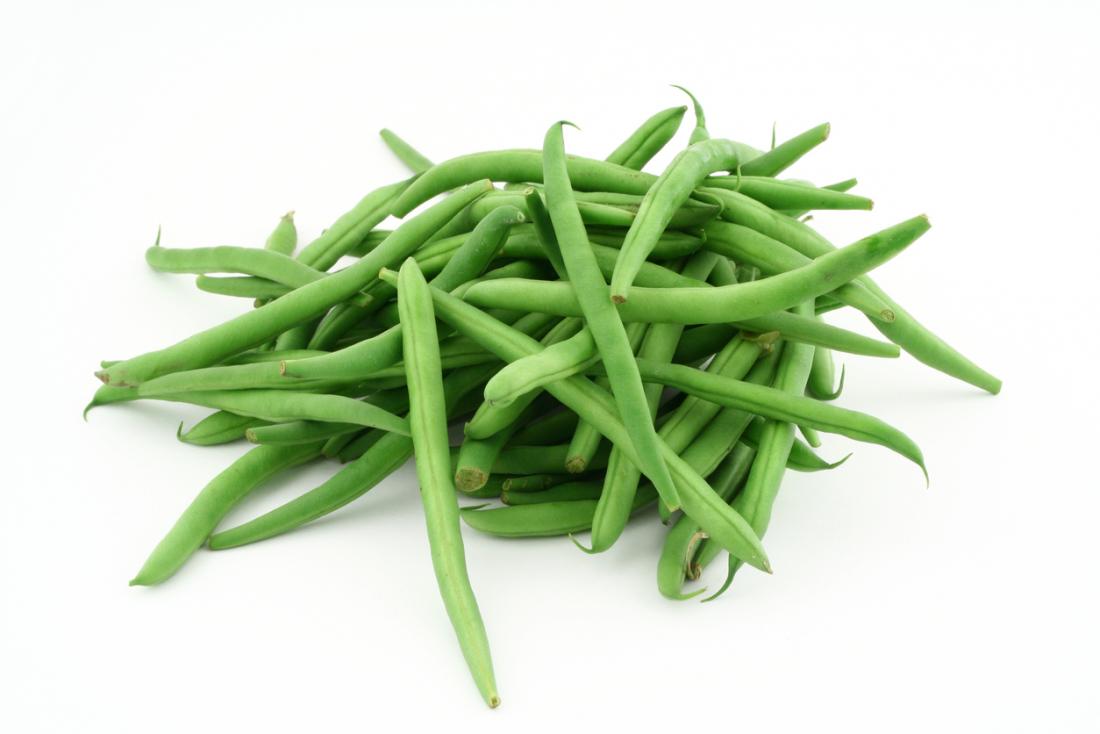 Fruit |
| Compound/Extract | Activity | Mode of Action | Marker/References |
| Phytohemagglutinin (PHA) lectin | Anti-tumor / Antiproliferative | Phytohemagglutinin (PHA) lectin helps in induction of apoptosis by increasing pro-apoptotic proteins Bax and activating caspase-3 enzymes. | Bax and caspase-3 enzymes[2] |
| Major Class | Metabolites (Content of bioactives: mg/100g Fresh Weight) |
| Carotenoid | Lutein: 0.24, β- Carotene: 0.41[1] |
| Flavanoid | Kaempferol : 1.78, Quercetin: 3.17[1] |
| Effect | Observation | DOI |
| In vitro studies | Increased counts of Lactobacillus plantrum, L. fermentum Bifidobacterium spp., | DOI: 10.1016/j.lwt.2018.11.089 |
| In vitro studies | Increased production of SCFAs | DOI: 10.1016/j.lwt.2018.11.089 |
| Animal model studies | Increased count of SCFA-producing bacteria such as Bacteriodes, Butyricoccus, Blautia and Eubacterium | DOI: 10.1039/C9FO01813A |
| Animal model studies | Decreased activity of Clostridium and E. coli | DOI: 10.1016/j.foodres.2019.04.060 |
| Animal model studies | Increase in Lactobacillus and Bifidobacterium counts | DOI: 10.1016/j.foodres.2019.04.060 |
| Disease | Formulation | Reference | Author | TKDL |
| Seminal disorders(ukra roga),Disorders of Menstrual blood(Artavavikara),Palliative disease,All types,Urinary disorders / Polyuria(Prameha / meha),All types,Dysuria,All types(sarvaprakarake),Stone in Urinary Bladder / Urolithiasis / Urinary Calculus(Mutrasmari),All types(sarvaprakarake),Retention of urine,Hernia,Anaemia / Hyperbilirubinaemia,Jaundice(kamala),Chronic obstructive jaundice/Chlorosis,Cough / Bronchitis(kasa),Dyspnoe,Leprosy and other dermatoses,Dyspepsia/Loss of appetite(agnimandya),Anorexia (arocaka),Venereal disease(Sujaka Aupasargika Meha) | Ma-sha | Dud-tsi nying-po yan-lag gyad-pa sang-wa man-ngag gi-gyud zes-ja-wa (Four Tantras) - compiled by Youthok Yontan Gonbo - Published By - T. Sonam Tashigang B.P.O.- sNyimo Leh-Ladakh 1973 | Buddha Shakamuni, compiled by Youthok Yontan Gonbo - Published By - T. Sonam Tashigang B.P.O.- sNyimo Leh-Ladakh 1973 | Sow Rigpa |
| Information from Wealth of India | Reference |
|
CSIR(1952).The Wealth of India, Raw materials, Vol-III,P.: 8-13, New Delhi, India |
| 4.2, 04.2.1, 04.2.1.1, 04.2.1.3, 04.2.2.3, 04.2.2.5, 04.2.2.6, 04.2.2.8 |
| CSIR-North East Institute of Science and Technology, Jorhat-6, Assam, India
CSIR-Institute of Himalayan Bioresource Technology, Palampur-61,Himachal Pradesh, India |