
Nelumbo nucifera Gaertn.
|
It is commonly known as Kamal and belongs to the Nelumbonaceae family. Leaf petiole, tender fruits and root stock are consumed as vegetable. Flavanoinds Neferine and Nuciferin were reported in N. nucifera. Supplementation of Lotus plumule inhibited the production of pro-inflammatory cytokine TNF-α and considerably upregulated anti-inflammatory cytokine IL-10 in LPS-challenged mice models. Mode of Consumption : Cooked young flowers, leaf petiole, tender fruits and root stock |
| Plant Details | Agro-climatic Zone | Vernacular Names | Pictures |
| Scientific Name: Nelumbo nucifera Gaertn. Family: Nelumbonaceae A.Rich. Class: Magnoliopsida Order: Proteales Genus: Nelumbo Adans Fruiting Season: October to November Parts: Leaf petiole, Tender fruits, Root stock. |
|
Andhra Pradesh : Tamara, Erra-tamara, Kalung Assam : Padam, Padum, Komol Bihar : Kamal, Nilufer Delhi : Kamal, Nilufer Gujarat : Motunkamal Haryana : Kamal Jammu & Kashmir : Pamposh, Nilufer Jharkhand : Kamal Karnataka : Taavare Tavare-gadde, Kamala Kamalada Hoovu, Aabal Kerala : Tamara Madhya pradesh : Kamal Maharashtra : Pandkanda, Kamal Manipur : Thambal Mizoram : Tui-lili Odisha : Padam, Ranga Padma,Dhala Padma Rajasthan : Kamal Tamil Nadu : Chenthaamarai, Tamarai, Ambal Telangana : Nilufer, Tamara, Erra-tamara, Kalung Tripura : Kamal Uttar pradesh : Kamal, Nilufer Uttarakhand : Kamal West Bengal : Komol, Nilufer |
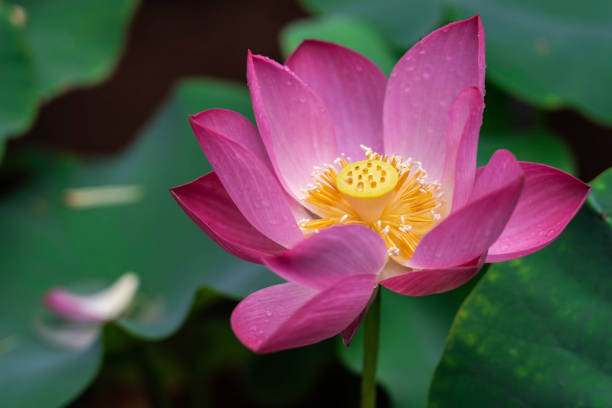 Flower 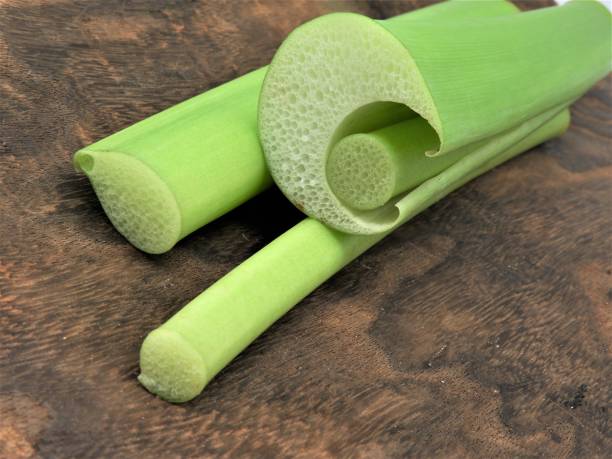 Leaf petiole  Root 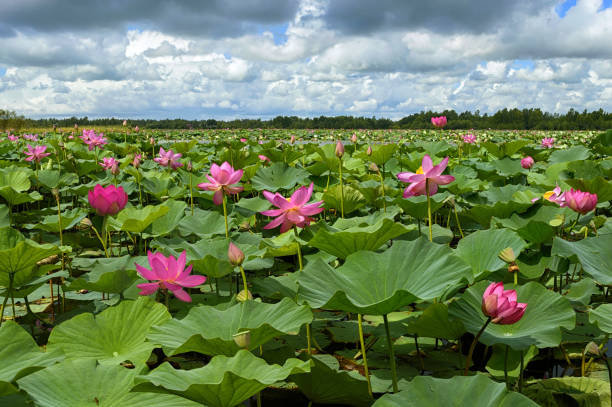 Plant 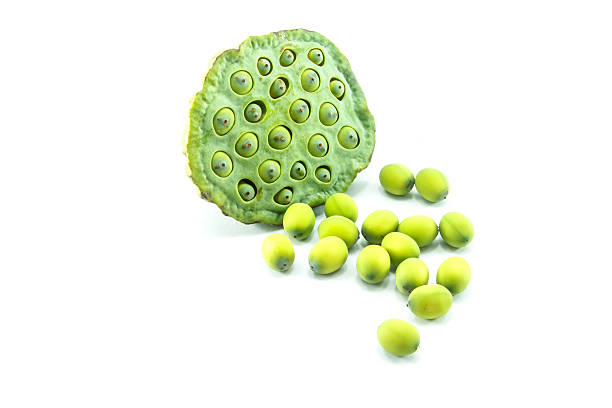 Fruit with seeds |
| Compound/Extract | Activity | Mode of Action | Marker/References |
| (S)-armepavine | Immunomodulatory | (S)-armepavine impaired IL-2 and IFN-γ transcripts in human peripheral blood mononuclear cells (PBMCs). | IL-2 and IFN-γ[2] |
| Water-soluble polysaccharide extract | Immunostimulatory | Crude water-soluble polysaccharide extract enhanced the proliferation, phagocytosis, nitric oxide (NO), and cytokine secretions by activating corresponding mRNA expression in macrophages, via MAPK and NF-κB pathways. | NO, MAPK, and NF-κB[3] |
| Rhizome | Immunoregulatory | Antioxidant components from rhizome exhibited positive regulation on IL-2, IL-4, and IL-10 and inhibited HIV-1 directly by inhibiting TNF-α. | IL-2, IL-4, IL-10, and TNF-α[4] |
| Extract | Anti-inflammatory | Its extract inhibited the inflammatory effects by decreasing the expression of iNOS and COX-2 in LPS-induced RAW264.7 cells and inhibited the LPS increased IL-6 and TNF-α concentrations. | iNOS, COX-2, IL-6, and TNF-α[5] |
| Extract | Antioxidant, Anti-inflammatory | Extract with flavonoid reduced oxidative damage and inflammation in injured mice, inhibited increase in AST, ALT, MDA, NO and increased SOD, CAT, GSH, and GSH-Px levels, upregulated anti-inflammatory cytokines IL-10 and IL-12, and downregulated proinflammatory cytokines IL-6, IL-1β, TNF-α, and IFN-γ. | AST, ALT, MDA, NO, SOD, CAT, GSH, GSH-Px, IL-10, IL-12, IL-6, IL-1β, TNF-α, and IFN-γ[6] |
| Lotus diet | Anti-inflammatory | Lotus diet increased the level of Adiponectin and suppressed the expression of lipogenic (acetyl-CoA carboxylase-1 (ACC-1) and fatty acid synthase (FAS)) and the inflammatory genes (CRP, MCP-1, and TNF-α) in the db/db mice. | ACC-1, FAS, CRP, MCP-1, and TNF-α[7] |
| Lotus plumule | Anti-inflammatory | Lotus plumule supplementation inhibited the production of pro-inflammatory cytokine TNF-α and increased anti-inflammatory cytokine IL-10 in LPS-challenged mice. | TNF-α and IL-10[8] |
| Major Class | Metabolites (Content of bioactives: mg/100g Fresh Weight) |
| Alkaloid | (−)-1(S)-norcoclaurine: , (+)-1(R)-coclaurine: , (6R,6aR)-roemerine-Nβ-oxide: , (S)-armepavine: , Asimilobine: , Isoliensinine: , Liensinine: , Liriodenine: , Lotusine: , Neferine: , N-nornuciferine: , Nuciferine: , Oleracein E: , Pronuciferine: , Roemerin: , trans-N-coumaroyltyramine: , trans-N-feruloyltyramine : [9] |
| Alkaloids | cis-N-coumaroyltyramine: , cis-N-feruloyltyramine: , Dauricine: , Demethyl-coclaurine: [9] |
| Flavanoid | Luteolin: [9] |
| Flavonoid | Apigenin: , Diosmetin: , Isorhamnetin: , Kaempferol: , Myricetin: , Quercetin: , Syringetin: [9] |
| Effect | Observation | DOI |
| Disease | Formulation | Reference | Author | TKDL |
| Conception promoting and Maintains the pregnancy | Kasamardadikshaya | Sahastrayoga | D.V Panditarao | Ayurveda |
| Stone in Urinary Bladder / Urolithiasis / Urinary Calculus, Dysuria, Retention of urine, Disease with Vata predominance | Kwath Kalpana | Sharangadhara Samhita | Shailaja Srivastava | Ayurveda |
| Seborrhoea,Pityriasis capitis / Furunculosis or boils in scalp, Eczema, Dry & weeping eczema, Capillary angiomata, naevi, Ulcer / Wound, of Head. | Mansi tailam | Bharata Bhaishajya Ratnakara - Vol.-IV | Compiled by Naginadasa Chaganalala Shah, Translated by Gopinath Gupta | Ayurveda |
| Facial Paralysis, Earache / Otalgia, Torticollis, Lockjaw, Deafness, Paralysis/Hemiplegia, Sciatica, Monoplegia / Limping, Paraplegia / Lameness | Mash thailam | Bharata Bhaishajya Ratnakara - Vol.-IV | Compiled by Naginadasa Chaganalala Shah, by Gopinath Gupta | Ayurveda |
| Prolapse of female genital tract, Excessive moistening of female genital tract, Foul smell from female genital tract | Mrinaladi tailam | Bharata Bhaishajya Ratnakara - Vol.-IV | compiled by Naginadasa Chaganalala Shah, Translated by Gopinath Gupta | Ayurveda |
| Treatment of Hiccough | Vikkallukku Karkam | Agathiyar vaithia kaviyam,1500 | Agasthiyar | Siddha |
| Information from Wealth of India | Reference |
|
CSIR(1966).The Wealth of India, Raw materials,Vol.-VII ,P.7-9, New Delhi, India |
| 4.2, 04.2.1, 04.2.1.1, 04.2.1.3, 04.2.2.6, 04.2.2.8 |
| CSIR-North East Institute of Science and Technology, Jorhat-6, Assam, India
CSIR-Institute of Himalayan Bioresource Technology, Palampur-61,Himachal Pradesh, India |