
Musa × paradisiaca L.
|
It is commonly known as Kela and belongs to the family Musaceae. Raw banana is consumed as vegetables and is a rich source of iron, calcium, magnesium, sodium, potassium, phosphorus and vitamins, especially vit C and E. M. paradisiaca reprtedly produces TNF-α. Mode of Consumption : Cooked young flowers, pseudostem, boiled and fried raw fruits |
| Plant Details | Agro-climatic Zone | Vernacular Names | Pictures |
| Scientific Name: Musa × paradisiaca L. Family: Musaceae Juss. Class: Magnoliopsida Order: Zingiberales Genus: Musa L. Fruiting Season: April-August Parts: Shoot, infloroscence, fruit, pseudostem |
|
Arunachal Pradesh : Koi athia, Kach kol, Kolung Assam : Kashkol Bihar : Kela Nagaland : Hegumci Uttar Pradesh : Kela |
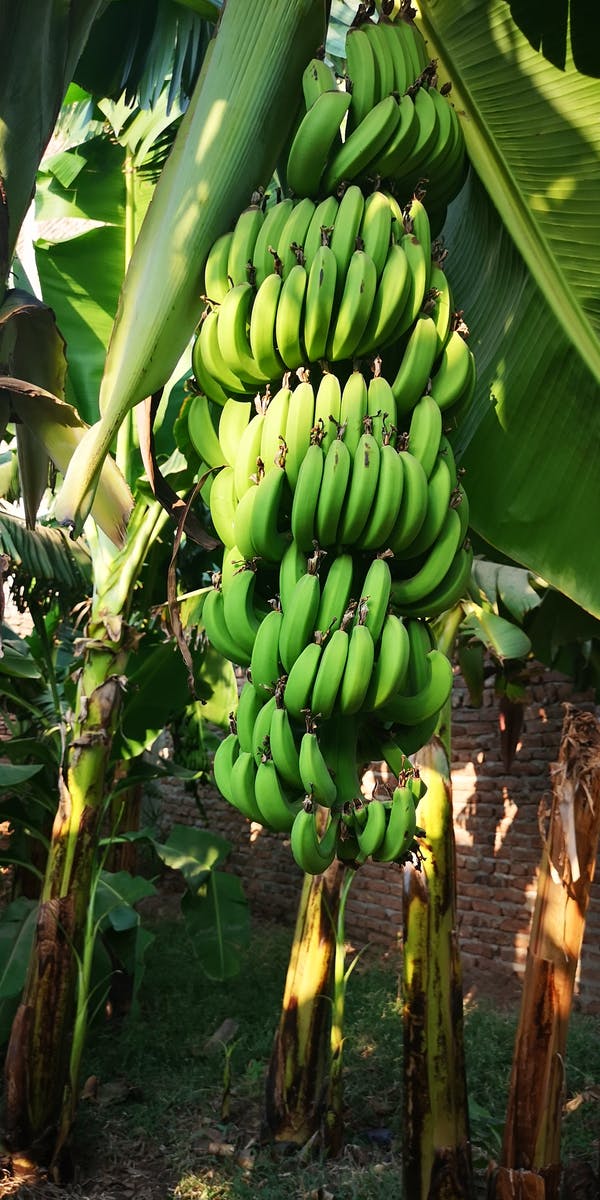 Plant bearing fruits 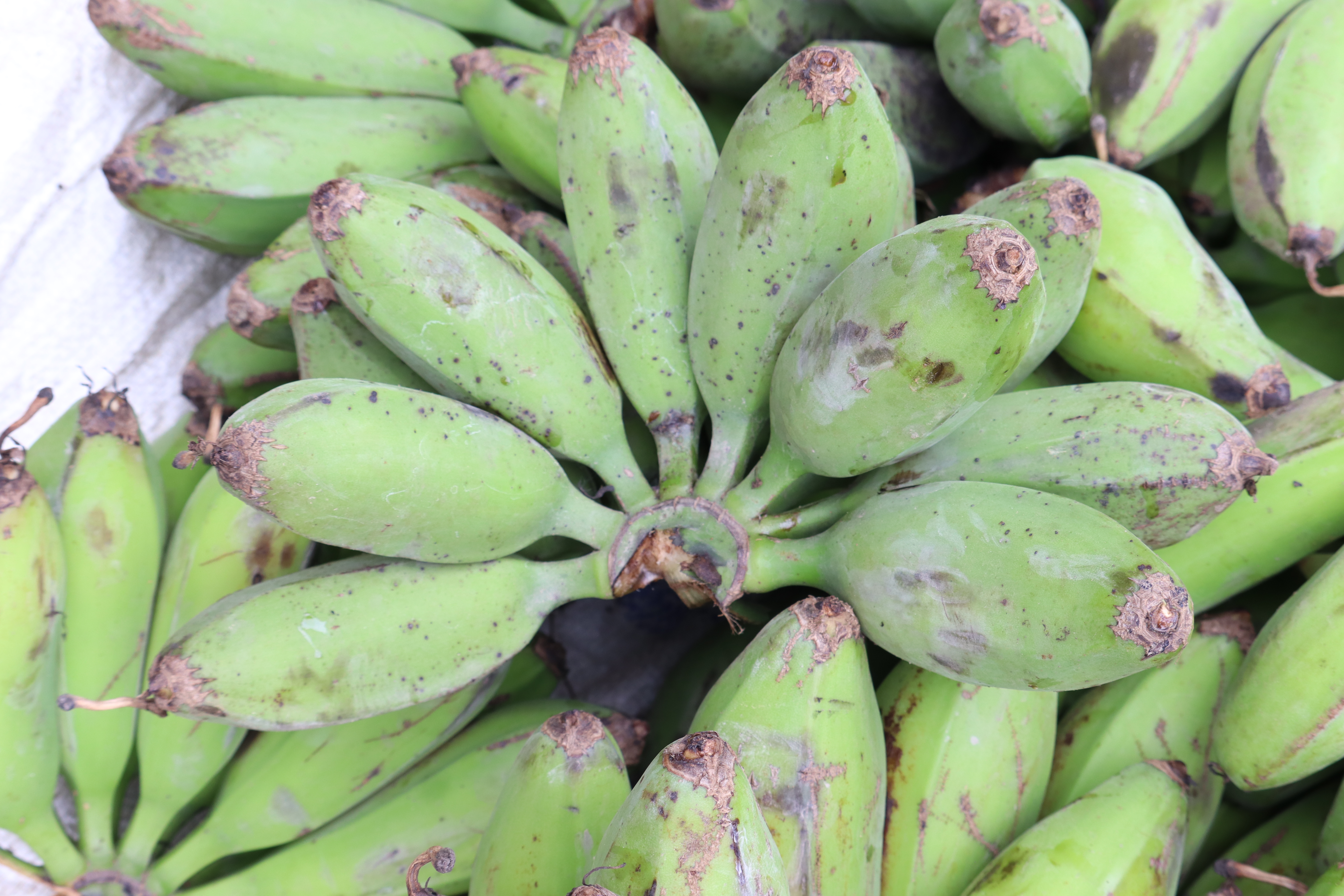 Hand |
| Compound/Extract | Activity | Mode of Action | Marker/References |
| Sap | Antidiarrhoeal | The sap exhbited antidiarrhoeal activity and perhaps enhanced fluid and electrolyte absorption through the gastrointestinal tract and enhanced the activity of Na+-K+ ATPase through de novo synthesis or via NO/prostaglandin pathway. | NO[1] |
| Green banana supplement diet | Anti-inflammatory | Inflammatory cytokines like IL-1β and IL-6 were released as a result of TNF-α secretion from myeloid cells through the activation of NF-κB and MAPK. | L-1β, IL-6, TNF-α NF-κB, and MAPK[2] |
| Stem extract | Anti-inflammatory | The banana stem extract can decrease TNFα, IL-1β and IL-6 expression. Further TNFα, IL-1β and IL-6 expression were decreased with the increased dose of banana stem extract. | TNFα, IL-1β, and IL-6[3] |
| Lectin | Mitogenic | Banana lectin is mitogenic for cow and pig PBMC via IL-2 Pathway and ELF1. | IL-2 and ELF1[4] |
| Lectin | Immunomodulatory | Banana lectin induced secretion of several immune regulators like positive regulators of activated T cell proliferation and JAK-STAT signaling pathway. | Jak-STAT[4] |
| Lectin | Immunomodulatory | The enriched immune proteins present in Banana lectin stimulated PBMC secretome consisted of CD226, CD27, IFN-γ, IL18, IL2, CXCL10, LAT, ICOS, IL2RA and LAG3. | CD226, CD27, IFN-γ, IL18, IL2, CXCL10, LAT, ICOS, IL2RA and LAG3.[4] |
| Super green (SG) | Wound healing | Significant decrease in the expression of TNF-α, IL-1β, and IL-6 was observed in the wound tissue of SG/6000-treated rats compared to vehicle-treated rats. | TNF-α, IL-1β, and IL-6[5] |
| Major Class | Metabolites (Content of bioactives: mg/100g Fresh Weight) |
| Effect | Observation | DOI |
| Disease | Formulation | Reference | Author | TKDL |
| Iatrogenic illness | Lokanatharasa Vikarasantyopaya | Rasaratnasamucchaya | Written by Vagbhatta, Translated by Indra deva Tripathi | Ayurveda |
| Cough / Bronchitis, Leprosy, Colic, Disease, Gonorrhoea | Abraha Parpam | Matchamuni perunool -800.CCRAS Publications. Chennai.(1985). | Matchamuni | Siddha |
| Providing longevity, treatment of Weakness due to sexual indulgence, Venereal disease, Disease of male genital organs, Chronic & severe condition of any disease | Thanga Parpam | Therayar Venba | Therayar | Siddha |
| Information from Wealth of India | Reference |
|
CSIR(1962).The Wealth of India, Raw materials,Vol.-VI ,P.452-468, New Delhi, India |
| 4.2, 04.2.1, 04.2.1.1, 04.2.1.3, 04.2.2.3, 04.2.2.5, 04.2.2.8 |
| CSIR-North East Institute of Science and Technology, Jorhat-6, Assam, India
CSIR-Institute of Himalayan Bioresource Technology, Palampur-61,Himachal Pradesh, India |