
Momordica charantia L.
|
It is commonly known as Karela. It belongs to the family Cucurbitaceae. It is rich in steroids, triterpenoids, mucilages, and polyphenols. Momordicin, Momordicine II, Vicine, Momordin, Charantin and 3-hydroxycucurbita-5,24-dien-19-al-7,23-di-O-β-glucopyranoside are its notable bioactive markers. Leafy stem juice enhances IFN-ϒ production, interleukin IL-1β, IL-6, IL-23, and TNF-α, CCL-17, and NF-kB mRNA and protein levels (Fachinan et al. 2017). Bitter gourd diet increases concentration of IgA, IgG and IgM immunoglobulins in the plasma by indicating its immune boosting capability. Mode of Consumption : Fried, cooked, juice (raw) |
| Plant Details | Agro-climatic Zone | Vernacular Names | Pictures |
| Scientific Name: Momordica charantia L. Family: Cucurbitaceae Juss. Class: Magnoliopsida Order: Cucurbitales Genus: Momordica L. Fruiting Season: March to May Parts: Fruit |
|
Andhra Pradesh : Kakarakaya Arunachal Pradesh : Karela Assam : Titakerela Bihar : Karela Gujarat : Karela Himachal Pradesh : Karela Kerala : Kanandkappaval, Pavaykka, Kattupaval, Undappaval, Nadanpaval Punjab : Karela Tamil Nadu : Kundupavai, Padupavai, Pakarkai, Naippaval Uttar Pradesh : Karela Uttarakhand : Karela West Bengal : Korla |
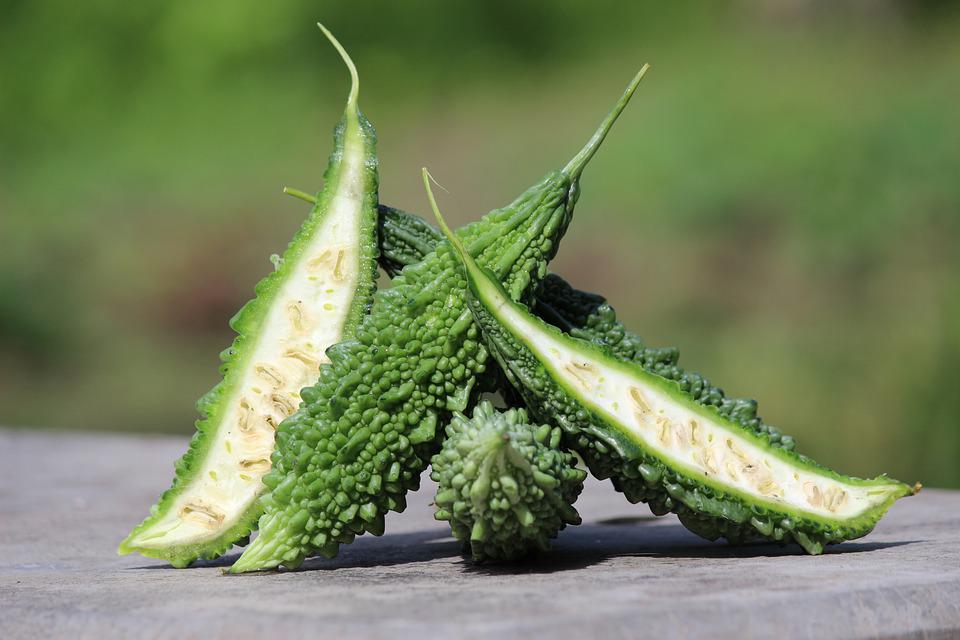 Sliced Fruit 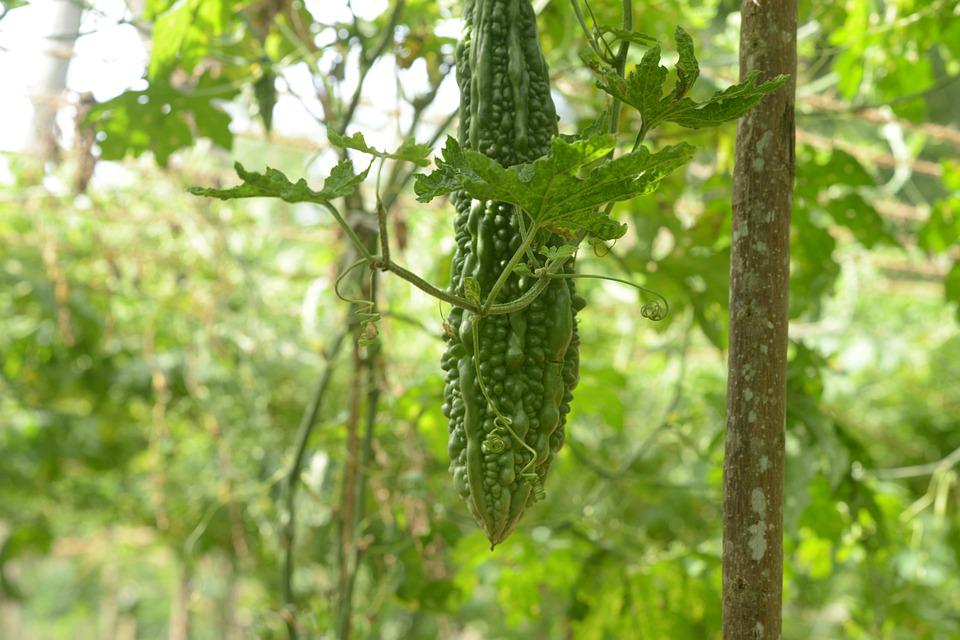 Fruit bearing plant 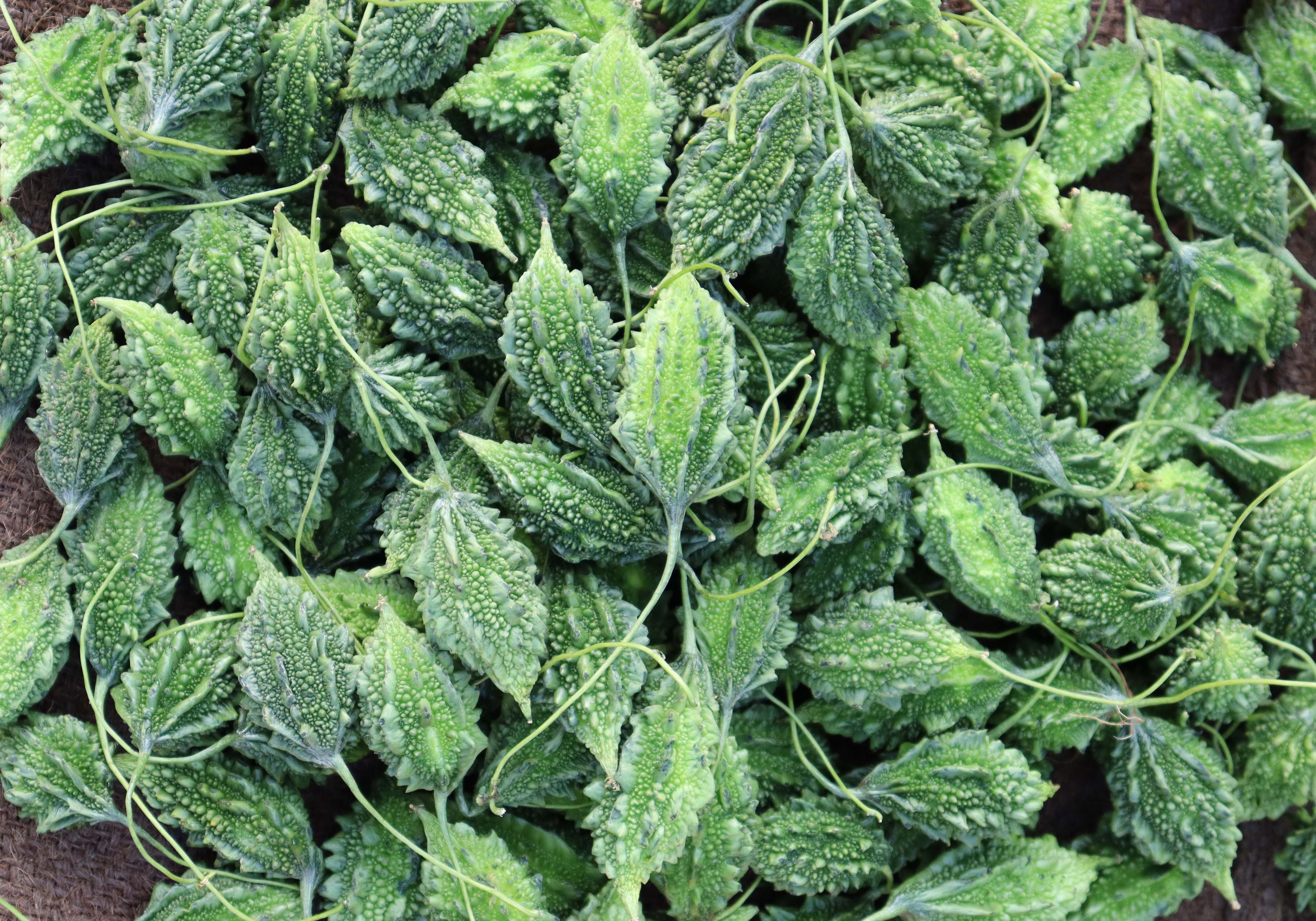 Fruit |
| Compound/Extract | Activity | Mode of Action | Marker/References |
| Aqueous ethanolic extract of unripe fruit | Anti-apoptotic | It protects pancreatic β-cells through down-regulation of MAPKs and NF-κB. | MAPKs and NF-κB[1] |
| Fruit powder | Anti-inflammatory | Bitter melon powder could significantly improve the proinflammatory cytokine TNF-α and IL-6, anti-inflammatory cytokine IL-10, and local endotoxin levels. | TNF-α, IL-6, and IL-10[8] |
| Fruit powder | Anti-inflammatory | Bitter melon powder suppressed the activation of nuclear factor-κB (NF-κB) and phosphorylation of c-Jun N-terminal kinase/ p38 mitogen-activated protein kinases (JNK/p38 MAPKs) in adipose tissue. | NF-κB and JNK/p38 MAPKs[8] |
| BG-4 peptide isolated from MC | Anticancer | Downregulation of antiapoptotic proteins Bcl-2 and XIAP, upregulation of proapoptotic proteins Bax and caspase-3 and modification of cell cycle proteins p21 and cyclin dependent kinase 2 (CDK2) | Bcl-2 , XIAP, Bax, caspase-3, p21 and CDK2[9] |
| Leafy stem juice | Antidiabetic | Leafy stem juice enhanced IFN-ϒ production, IL-1β, IL-6, IL-23, TNF-α, CCL-17, and NF-κB mRNA and protein levels in peripheral blood mononuclear cells (PBMC). | IFN-ϒ, IL-1β, IL-6, IL-23, TNF-α, CCL-17, and NF-κB[17] |
| Fruit | Anti-inflammatory | High fat diet induced glial cells activation and expression of neuroinflammatory markers such as NF-κB1, IL-16, IL-22 as well as IL-17R were normalized in the brains of mice supplemented with bitter melon. | NF-κB1, IL-16, IL-22, and IL-17R[20] |
| Fruit | Anti-inflammatory | The concentrations of IgA, IgG and IgM in the plasma of rats that had been fed on the bittergourd diet were significantly higher than the rats fed on control diet. | IgA, IgG, and IgM[21] |
| Water extract | Anti-inflammatory | MC treatment attenuated the LPS-induced Warburg Effect by reducing the gene expression of GLUT1 and HK2, inhibits the activition of MAPKs and NF-κB DNA-binding activity | GLUT1 and HK2 genes, MAPKs and NF-κB [26] |
| Dried powder and ethanolic extract | Antioxidant | Increased in the level of Glutathione (GHS) and activity of Superoxide dismutase (SOD). Decreased the level of Malondialdehyde (MDA). | GHS, SOD, and MDA[27] |
| Antioxidant | Results suggests that the heating process (boiling) led to a relevant increase of antioxidant components in Momordica charantia. | [31] |
| Major Class | Metabolites (Content of bioactives: mg/100g Fresh Weight) |
| Alkaloid | Momordicin : , Momordicine II: , Vicine: [29] |
| Carotenoid | Lutein : 19.33, α- Carotene: 0.185 mg/100g, β- Carotene: 0.19 mg/100g[30] |
| Momordicoside | Momordicoside L : 3.76[19] |
| Phenolic acid | Protocatechuic acid : 0.21 - 0.78[24] |
| Saponin | Momordin: [29] |
| Terpene | 3-Hydroxycucurbita-5,24-dien-19-al-7,23-di-O-β-glucopyranoside: , Charantin: [29] |
| Vitamin | Ascorbic acid: 84 mg/100g[30] |
| Effect | Observation | DOI |
| In vitro studies | Increased production of SCFAs such as acetic acid and butyric acid | DOI: 10.1016/j.fbio.2013.01.002 |
| Animal model studies | Modulation of gut microbioata | DOI: 10.1080/09637486.2016.1197185 |
| Animal model studies | Reduction the strains of Bectaroids and Ruminococcus | DOI: 10.1080/09637486.2016.1197185 |
| Disease | Formulation | Reference | Author | TKDL |
| Malaria / Intermittent fever | Jvaradkusarasa | Bharata Bhaishajya Ratnakara - Vol.-II | Compiled by Nagin Das Chadan Das Saha, Translated by Gopinath Gupta | Ayurveda |
| Fever | Shetadukusharasa | Bharata Bhaishajya Ratnakara - Vol.-V | Compiled by Nagin Das Chadan Das Saha, Translated by Gopinath Gupta | Ayurveda |
| Chronic pyrexia | Shitarirasa | Brihadrasarajasundara | Compiled & Translated by, Dattaram Caube | Ayurveda |
| Pyrexia, Cold | Shitarirasa | Rasayoga Sagara, Vol.-II | Compiled and Translated by Vaidya P. Hariprapanna J | Ayurveda |
| Carbuncle/Furuncle, Non-healing ulcer, Ulcer / Wound, Pyrexia, Urticaria/Allergic rashes | Agasthiyar Kuzhambhu | Agathiyar amutha kalai gnanam1200 | Agasthiyar | Siddha |
| Information from Wealth of India | Reference |
|
CSIR(1962).The Wealth of India, Raw materials,Vol.-VI ,P.408-411, New Delhi, India |
| 4.2, 04.2.1, 04.2.1.1, 04.2.1.3, 04.2.2.2, 04.2.2.3, 04.2.2.5, 04.2.2.6, 04.2.2.8 |
|
| CSIR-North East Institute of Science and Technology, Jorhat-6, Assam, India
CSIR-Institute of Himalayan Bioresource Technology, Palampur-61,Himachal Pradesh, India |