
Luffa acutangula (L.) Roxb.
|
Ridge gourd is commonly known as Jinga/Kali toroi. It belongs to the family Cucurbitaceae. The fruits of this plant are cooked as vegetable that has a good amount of fiber, Vitamin B2, Vitamin C, carotene, niacin, calcium, phosphorus, iron and small amount of iodine and fluorine. It is reported to contain many phytochemicals such as flavonoids, saponins, luffangulin, sapogenin, oleanolic acid and Cucurbitacin B. Juice of ridge gourd mixed along with other healthy vegetables helps to strengthen the immune system and thus acts as an immunobooster. 1,8-dihydroxy-4-methylanthracene-9,10-dione from ridge gourd downregulates the expression of NF-κB in NCI-H460 cell line. Mode of Consumption : Boiled and cooked |
| Plant Details | Agro-climatic Zone | Vernacular Names | Pictures |
| Scientific Name: Luffa acutangula (L.) Roxb. Family: Cucurbitaceae Juss. Class: Magnoliopsida Order: Cucurbitales Genus: Luffa Mill. Fruiting Season: May-August Parts: Fruit |
|
Andhra Pradesh : Beera, Chedu beeha, Varri beera Bihar : Turai Gujarat : Gujarati : Turiya, Kadawa, Turiya Karnataka : Hire-Valli Kerala : Pichenga, Peerkam Kai Maharashtra : Dodka Turiya Punjab : Turiya Tamil nadu : Pirkankai, Peerkku Uttar Pradesh : Turai, Satputia West Bengal : Zinga |
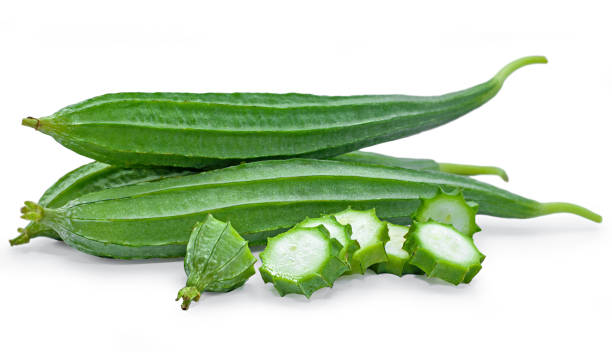 Fruits |
| Compound/Extract | Activity | Mode of Action | Marker/References |
| 1,8-dihydroxy-4-methylanthracene-9,10-dione | Anticancer | 1,8-dihydroxy-4-methylanthracene-9,10-dione significantly increased the expression of anti-apoptotic protein, p53, p21, Bax, and caspase-3 but downregulated the expression of NF-κB in NCI-H460 cell line. | p53, p21, Bax, caspase-3, and NF-κB[2] |
| Hydro-alcoholic extract | Antioxidant | Hydro-alcoholic extract reduced toxicity of doxorubicin and restored the reduced glutathione, catalase, superoxide dismutase in heart and kidney in mice. | GSH, CAT, and SOD[3] |
| Boiling | Antioxidant | Boiling has been reported to increase in the free radical scavenging activity of Luffa acutangula | [4] |
| Major Class | Metabolites (Content of bioactives: mg/100g Fresh Weight) |
| Carboxylic Acid | Ferulic acid: 13.04 mg/100 g DW, Gallic acid: 34.98 mg/100 g DW, p-coumaric acid: 68.64 mg/100 g DW, p-hydroxybenzoic acid: , Protocatechuic acid: 30.52 mg/100 g DW[1] |
| Flavonol | Catechin: [1] |
| Effect | Observation | DOI |
| Disease | Formulation | Reference | Author | TKDL |
| Discharge from wound, Malaria/Intermittent fever, Cough/Bronchitis, Dyspnoea, Urinary disorders/Polyuria, Anaemia/Hyperbilirubinaemia, Jaundice, Oedema/Inflammation, Sprue/Malabsorption Syndrome, Immuno suppressive/Emaciating disease, Complication | Jvarakunjaraparindrarasah | Brihadrasarajasundara | Compiled and translated by, Dattaram Chaube | Ayurveda |
| Information from Wealth of India | Reference |
|
CSIR(1962).The Wealth of India, Raw materials,Vol.-VI ,P.179 New Delhi, India |
| 4.2, 4.2.1, 4.2.1.1, 4.2.1.2, 4.2.1.3, 4.2.2.8 |
| CSIR-North East Institute of Science and Technology, Jorhat-6, Assam, India
CSIR-Institute of Himalayan Bioresource Technology, Palampur-61,Himachal Pradesh, India |