
Lagenaria siceraria (Molina) Standl.
|
It is commonly known as Lauki, or bottle gourd. It belongs to the family Cucurbitaceae. A wide range of chemical compounds including sterols, terpenoids, flavonoids, and saponins have been isolated from the species. The fruit is reported to contain the triterpenoids viz. Cucurbitacins and two sterols viz. Fucosterol and Campesterol. In brief, it plays an important role in meeting global healthcare needs. Mode of Consumption : Fried as pakora, boiled or cooked |
| Plant Details | Agro-climatic Zone | Vernacular Names | Pictures |
| Scientific Name: Lagenaria siceraria (Molina) Standl. Family: Cucurbitaceae Juss. Class: Magnoliopsida Order: Cucurbitales Genus: Lagenaria Ser. Fruiting Season: March to August Parts: Fruit, Leaves |
|
Andhra Pradesh : Sorakkaya Arunachal Pradesh : Lauki Assam : Jati Lau, Lau Bihar : Lauki Gujarat : Tumada Karnataka : Sorekayi Maharashtra : Dudhi Manipur : Khongdrum Tamil Nadu : Surakkai Uttar Pradesh : Lauki West Bengal : Ladu |
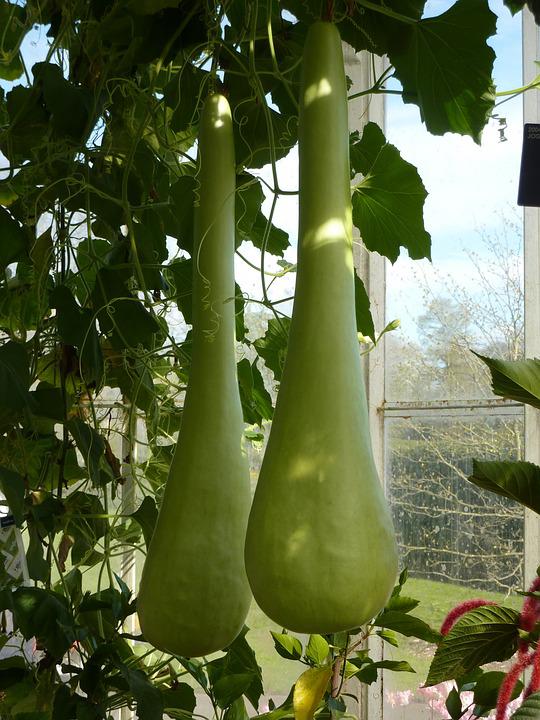 Fruit bearing plant 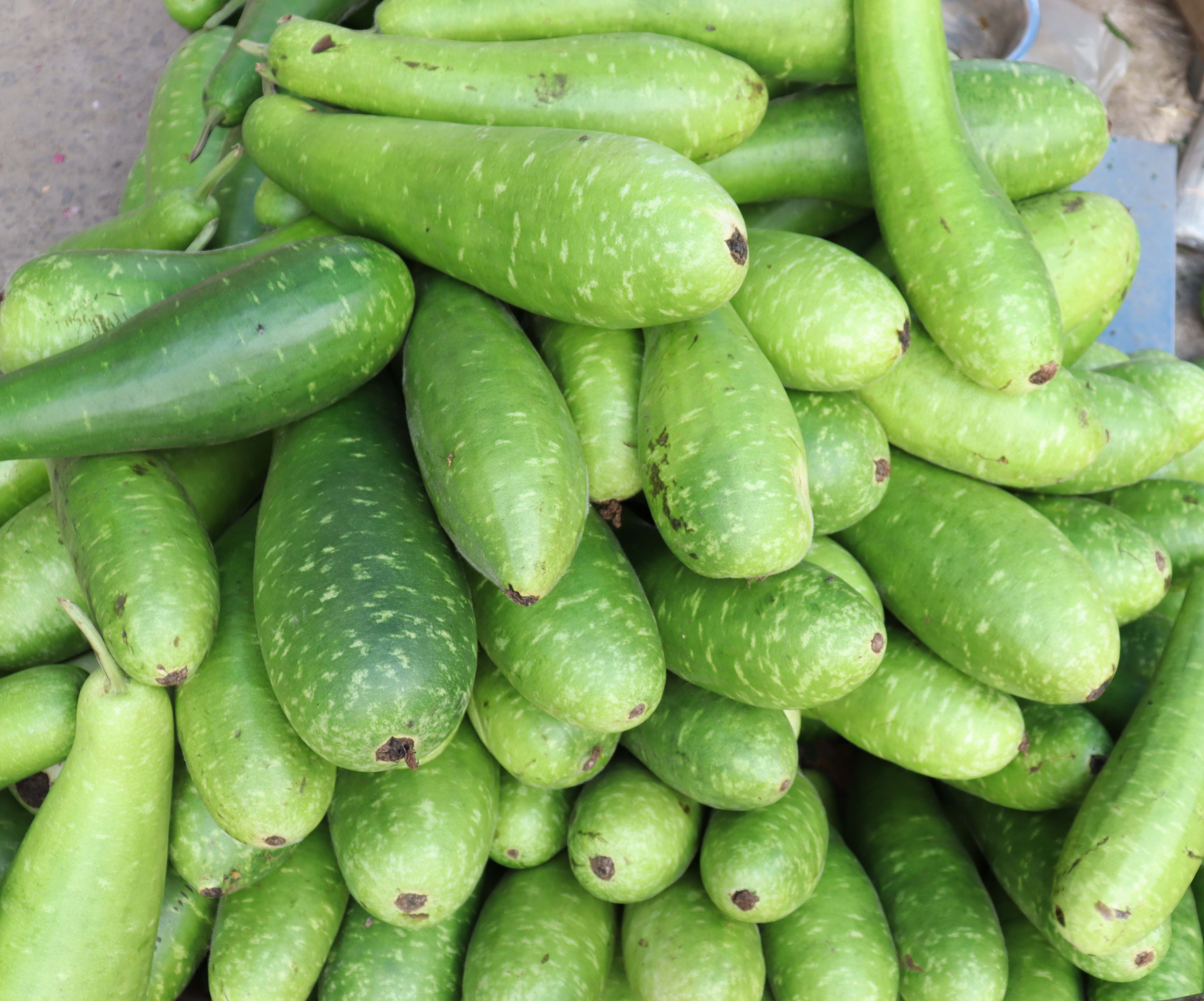 Fruits |
| Compound/Extract | Activity | Mode of Action | Marker/References |
| Lectin | Anticancer | Its lectin exhibited moderate cytotoxicity against MDA-MB-231 breast cancer cells, whereas its effect on normal splenocytes was marginal. | [2] |
| Ethanolic extract of fruit | Hypocholesterolemic, Hypolipidemic | Ethanolic extract of the fruit significantly reduces serum TNF-α level in treated groups compared to obese rats as control group. | TNF-α[4] |
| Fruit | Anticancer, Anti-inflammatory | Cucurbits show decreased secretion of IL-8. | IL-8[6] |
| Major Class | Metabolites (Content of bioactives: mg/100g Fresh Weight) |
| Flavonoid | Isoquercitrin: [7] |
| Sterol | Campesterol: , Fucosterol: [7] |
| Terpene | Cucurbitacin B: [7] |
| Triterpenoid | 22-deoxy cucurbitacin: [7] |
| Effect | Observation | DOI |
| Disease | Formulation | Reference | Author | TKDL |
| Anasarca | Veekkathirku Kudineer | Therayar Kudineer | Therayar | Siddha |
| Melanagogue, Exhilarant, General tonic, Frigorific, for Heart, Liver, and Stomach, Spermatogenic, General Adipogenous, Diuretic, Haemostyptic | Petha | Khazaain-al-Advia, Vol II | Mohd. Najmul Ghani Khan | Unani |
| Information from Wealth of India | Reference |
|
CSIR(1962).The Wealth of India, Raw materials,Vol.- VI,P.16-19, New Delhi, India |
| 4.2, 04.2.1, 04.2.1.1, 04.2.1.3, 04.2.2.3, 04.2.2.5, 04.2.2.6, 04.2.2.8 |
| CSIR-North East Institute of Science and Technology, Jorhat-6, Assam, India
CSIR-Institute of Himalayan Bioresource Technology, Palampur-61,Himachal Pradesh, India |