
Ipomoea batatas (L.) Lam.
|
Sweet potato is commonly known as Shakarkand. It belongs to the family Convolvulaceae and possesses high nutritional value. It is rich in phenolic compounds, flavonoids and anthocyanins. It contains notable bioactive compounds like Aesculetin, Scopoletin, β-carotene and Umbelliferon. Sweet potato exhibits anti- inflammatory, anti-diabetic and anti- cancer activities. Three kinds of polysaccharides extracted from I. batatas (purple sweet potato) exhibited in vitro and in vivo immune-enhancing activities which can stimulate immune responses of macrophages and positively regulate adaptive immunity by enhancing the production of immunoglobulins in mice. Mode of Consumption : Boiled, fried and roasted |
| Plant Details | Agro-climatic Zone | Vernacular Names | Pictures |
| Scientific Name: Ipomoea batatas (L.) Lam. Family: Convolvulaceae Juss. Class: Magnoliopsida Order: Solanales Genus: Ipomoea L. Fruiting Season: All round the year Parts: Root |
|
Andhra Pradesh : Chilagadadumpa Assam : Mitha Alu Bihar : Shakarkand Gujarat : Raktalu Himachal Pradesh : Sakarkand Karnataka : Sihi alugadde Kerala : Madhurakillan Tamil Nadu : Carkkarai Valli, Inipu urulaikillanku Uttar Pradesh : Shakarkand Uttarakhand : Shakarkand West Bengal : Mau Alu, Mishti Alu, Ranga Alu |
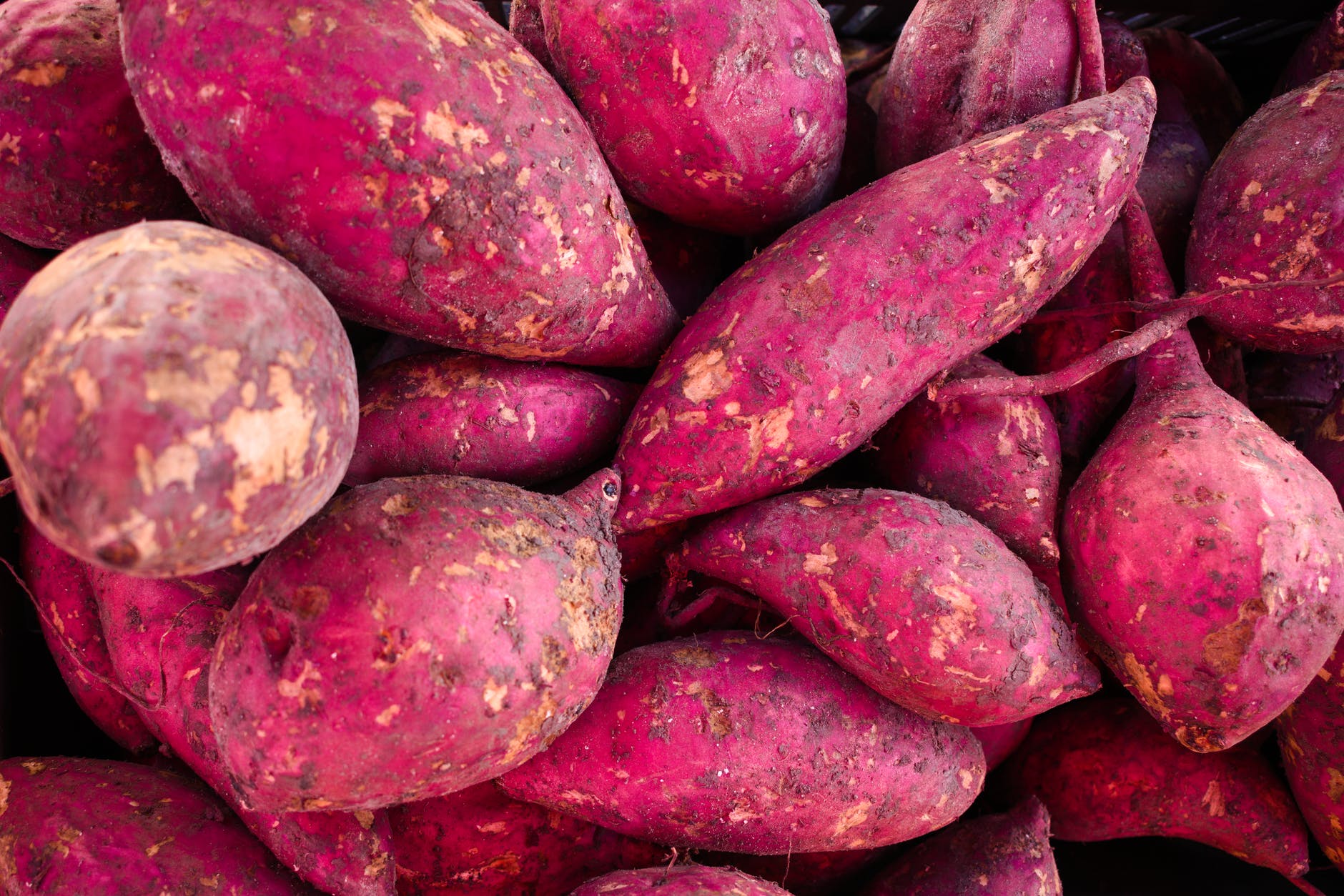 Tuber 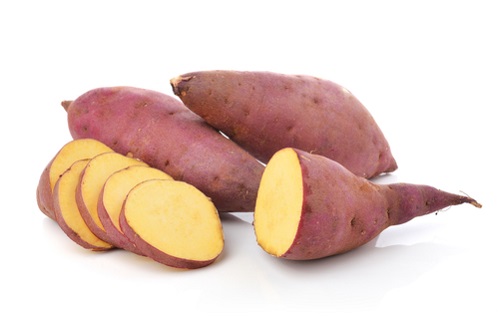 Tuber |
| Compound/Extract | Activity | Mode of Action | Marker/References |
| Polysaccharide | Immune enhancing | The polysaccharides positively regulated the adaptive immunity in both normal and immunosuppressed mice by augmenting the production of immunoglobulins (IgA, IgG, IgM and sIgA). | IgA, IgG, IgM, and sIgA[3] |
| Orange sweet potato | Immunomodulatory | Decreased serum hepatic biomarkers such as γ-glutamyl transferase(GGT), Aspertate aminotransferase (AST) and Alanine aminotransferase (ALT) | γ-Glutamyl transferase (GGT), Aspertate aminotransferase (AST) and Alanine aminotransferase (ALT)[6] |
| Purple sweet potato extract | Immunomodulatory | Attenuated the decreases in T- and B-cell proliferation, antioxidant enzyme activities, and imbalance of the Th1/Th2 cytokines by LP-BM5 MuLV infection | T- and B-cell, and Th1/Th2 cytokines[8] |
| Potao extract | Anti-inflammatory | Sweet potato extracts suppress the production of NO and proinflammatory cytokines, such as NF-κB , TNF-α, and IL-6, in LPS-induced macrophage cells. It exhibited reduction in the serum levels of interleukins IL-1β and IL-6 and nitric oxide. | NO, NF-κB , TNF-α, IL-6, and IL-1β[11] |
| Major Class | Metabolites (Content of bioactives: mg/100g Fresh Weight) |
| Anthocyanin | Cyanidin : 9.390000000000001, Peonidin : 7.34[1] |
| Carotenoid | β- Carotene : 0.02-1.58[1] |
| Coumarin | Aesculetin: , Scopoletin: , Umbelliferon: [14] |
| Flavonoid | Quercetin : 0.46-8.94[1] |
| Phenolic acid | 3,4,5-tri-O-caffeoylquinic acid (3,4,5-triCQA): , 3,4-di-Ocaffeoylquinic acid (3,4-diCQA): , 3,5-di-O-caffeoylquinic acid (3,5-diCQA): , 3-mono-Ocaffeoylquinic acid (Chlorogenic acid [ChA]): , 4,5-di-O-caffeoylquinic acid (4,5-diCQA): , Ferulic acid : 0.35-7.41[1] |
| Effect | Observation | DOI |
| In vitro studies | Increase in Lactobacillus/Enterococcus and Bifidobacterium and decreased in Bacteroides/Prevotella , Clostridium histolyticum, and Eubacterium rectale/Clostridium coccoides | DOI: 10.1111/1750-3841.15852 |
| In vitro studies | Increase in Lactobacillus acidophilus, Lactobacillus casei and Bifidobacterium animalis and increase in SCFAs | DOI: 10.1016/j.fbio.2020.100614 |
| In vitro studies | Proliferation of Bifdobacterium bifdum, Bifdobacterium adolescentis, Bifidobacterium infantis and Lactobacillus acidophilus and decrease in Staphylococcus aureus and Salmonella typhimurium | DOI: 10.1038/s41598-018-23397-0 |
| Disease | Formulation | Reference | Author | TKDL |
| Information from Wealth of India | Reference |
|
CSIR(1985).The Wealth of India, Raw materials,Vol.-V ,P.238-247, New Delhi, India |
| 4.2, 04.2.1, 04.2.1.1, 04.2.1.3, 04.2.2.3, 04.2.2.5, 04.2.2.6, 04.2.2.8 |
| CSIR-North East Institute of Science and Technology, Jorhat-6, Assam, India
CSIR-Institute of Himalayan Bioresource Technology, Palampur-61,Himachal Pradesh, India |